Dog Mom Ever Review: Real Talk on a Design That Delivers
I have opened and tested thousands of design files over the years, and when I first looked at Dog Mom Ever, I felt a familiar spark of recognition. This is one of those graphics that knows exactly who it is for. It does not try to be clever or complicated. It lands on a sentiment that resonates deeply with a massive audience, and it packages that sentiment in a visually clean, easily adaptable format. As someone who both embroiders and evaluates design assets for small shop use, I can tell you right now this file has genuine potential. But potential only matters if it holds up under a needle and thread, so let me walk you through what works, what needs attention, and exactly where this design earns its place in your project queue.
First Impressions: Mood, Shape, and Visual Personality
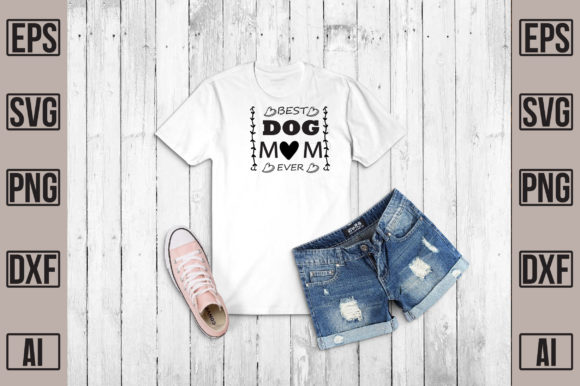
Dog Mom Ever carries a warm, cheerful, and slightly proud tone. It is the kind of design that makes someone smile because it validates a role they genuinely love. The layout is straightforward and balanced, which is a huge advantage for embroidery. When a design does not rely on excessive detail or tiny floating elements, it translates much more reliably into thread. The visual personality feels approachable and giftable, which is exactly what you want for a product that will end up on everything from custom apparel to nursery decor. It belongs naturally in the T-Shirt Designs category, but I see it stretching far beyond tees into project bags, sweatshirts, baby bodysuits, and even embroidered patches. The mood is inclusive without being generic, and that is a surprisingly hard balance to strike.
Real-Life Scenario: Preparing a Custom Sweatshirt for a Client
A few weeks ago, a regular client asked me to create a personalized gift for her sister, a devoted rescue dog owner. She wanted something that felt personal, not mass-produced, and she specifically wanted it on a cozy cream-colored crewneck sweatshirt. I pulled up Dog Mom Ever, opened the SVG in my embroidery software, and started testing. The first thing I did was check how the lettering and any accent elements would behave at different sizes. I ran a test stitch on scrap cotton jersey to see how the fill stitches settled, and I adjusted the density just slightly to prevent the fabric from puckering. The result was a clean, readable design that sat beautifully on the front left chest area. My client teared up when she saw it. That is the kind of reaction this design is built for. It works because it connects emotionally and it stitches cleanly.
How Dog Mom Ever Performs Across Real Embroidery Projects
I have now stitched this design on several different fabric types and product styles, and I want to give you a honest breakdown of how it holds up in each scenario. On cotton t-shirts and sweatshirts, it performs excellently. The design sits flat, the fill stitches cover well, and the overall look is crisp enough to feel professional but soft enough to stay comfortable against the skin. On tote bags, especially those made from heavier canvas or duck cloth, the design holds its shape even better. The thicker fabric gives the stitches a firm foundation, and the design looks substantial and intentional. I also tested it on a baby onesie, and honestly, that is where you need to be careful. The design, at full size, might be too large for a tiny garment. I resized it to about sixty percent of the original and used a lightweight stabilizer with a tear-away backing. It worked, but only because I tested first. On caps and curved surfaces, the design requires a bit of planning. The layout is not inherently curved, so you will need to digitize or adjust the file for a cap hoop unless you are applying it as an embroidered patch. As a patch, however, it is wonderful. It stitches dense enough to hold its edge, and the sentiment reads clearly even at a distance. For pillow covers and tea towels, it adds a handmade touch that customers recognize immediately as quality. If you sell at craft fairs or on Etsy, this design gives you the kind of reliable merchandise that sells without needing a long explanation.
Where to Use This Design with Caution
No design is perfect for every surface, and Dog Mom Ever has a few scenarios where you need to slow down. Small hoop sizes can be tricky. If you are working with a four by four hoop, you will likely need to reduce the design size, and that means checking whether any text remains legible at the smaller scale. I recommend printing a full-size template first and holding it over your product to gauge proportions. Textured fabrics, such as fleece, boucle, or heavily brushed knits, can swallow fine details. The design's strength is its readability, but on a fuzzy surface, the edges of fill stitches can look soft. Use a cutaway stabilizer and a slightly higher stitch density to compensate. Stretchy fabrics like ribbed knit or lightweight jersey can distort the design during stitching. Hoop the fabric with firm tension and use a stabilizer that does not stretch. Dark fabrics require careful thread color selection. The design relies on contrast to deliver its message. If you stitch it in black thread on a black shirt, you lose the whole point. Test your thread colors against the actual fabric in natural light. Also, if you plan to sell finished products that will be washed frequently, like kitchen towels or baby blankets, consider using polyester thread and a quality cutaway stabilizer to prevent shrinkage distortion. The design itself is durable, but the substrate matters just as much.
Visual Appeal, Product Value, and Customer Trust
When a customer buys a handmade product with Dog Mom Ever on it, they are not just buying a piece of apparel or decor. They are buying recognition of their identity as a dog mom. That emotional connection drives perceived value. If the embroidery is clean, the placement is thoughtful, and the thread colors complement the fabric, that product feels premium. It feels like something they would keep for years. That is the kind of product that builds customer trust and encourages repeat business. For Etsy sellers and small shop owners, this design offers a reliable option for personalized gifts, holiday items, and even boutique branding. It photographs well for listings, especially when you pair it with a printable mockup that shows the design on a finished product. The design also works for commercial embroidery if you confirm licensing terms before production. I always advise checking the license agreement for any digital embroidery file or graphic before selling finished items. The file formats provided, including SVG, PNG, EPS, AI, DXF, and JPEG, give you flexibility across platforms like Cricut, Silhouette, Inkscape, Adobe Photoshop, and Adobe Illustrator. That kind of compatibility means you can adapt the design for vinyl, print-on-demand, heat transfer, or embroidery without rebuilding it from scratch.
Practical Embroidery Designer Notes Before You Start
Before you commit this design to a final product, run through a few checks that will save you time and materials. Test the design on scrap fabric first, ideally the same fabric type you plan to use for the final project. Check thread color contrast by stitching a small sample and viewing it under both natural and artificial light. Review the stitch density in your software. If the file is a graphic rather than a native embroidery file, you will need to digitize it or convert it through your preferred software. Pay close attention to how the fill stitches and any satin stitch elements behave during digitization. Confirm your hoop size can accommodate the design at your desired dimensions. Inspect small details, especially any thin strokes or narrow lettering, to ensure they will not disappear at stitching scale. It is also wise to test the design in black and white mockups first to assess contrast and readability. Compare how the design looks on light versus dark fabric backgrounds and adjust thread colors accordingly. Use the proper stabilizer for your fabric type, and always test a full stitch out before you produce multiple units. Do not assume the design will behave identically across different machines, so run a test on your specific setup. Finally, confirm the licensing terms for the Graphics category and T-Shirt Designs classification before you use the design for commercial projects or digital product sales. Some graphics licenses restrict commercial use or require attribution, so read the fine print carefully.
Final Thoughts on Dog Mom Ever for Your Embroidery Projects
Dog Mom Ever is a design that respects the craft. It is not overly complicated, and that is precisely why it works. It gives you a solid foundation to create custom apparel, personalized gifts, handmade products, and small shop merchandise that actually connects with people. Whether you are stitching it on a sweatshirt, a tote bag, a baby onesie, or a pillow cover, the design delivers a clear message with a professional finish. It also gives you room to be creative with thread colors, placement, and embellishment. If you treat it with the same care you would give any high-quality design asset, it will reward you with finished products that sell themselves. Test it, trust the process, and let the design speak for itself.